Introduction
Portal Engine is built to expose Pimcore object data cleanly to external audiences, and for most field types, it does exactly that. When you start using advanced many-to-many relationships with metadata columns, the default rendering logic stops being helpful. A checkbox in your relationship metadata gets rendered as a 1 or an empty cell. Technically correct. Practically useless for the people actually reading the layout.
Here's the problem we ran into, how we solved it, and how that solution is now part of Pimcore's core.
Availability and Contribution
The following improvement was contributed upstream by TORQ directly to Pimcore. The change was accepted and merged into the Pimcore core and is available as a standard feature starting with Pimcore version 2025.4.
Developers upgrading to this version benefit from improved rendering of relationship metadata without requiring custom overrides or project-specific patches.
The Issue and Background
Portal Engine provides a flexible framework for exposing Pimcore object data to external audiences. It's default rendering behavior works well for standard field types and simple relationships, but more complex data models can expose limitations in how relational metadata is displayed.
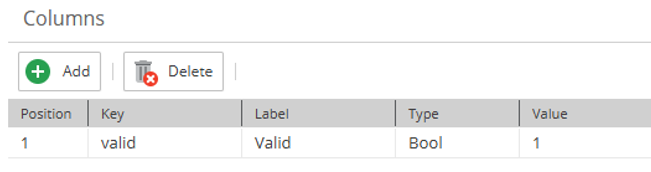
In this scenario, two object classes were connected using an advanced many-to-many relationship using it's metadata columns. The advanced metadata, stored as pivot data, represents attributes of the relationship itself rather than properties of either related object.
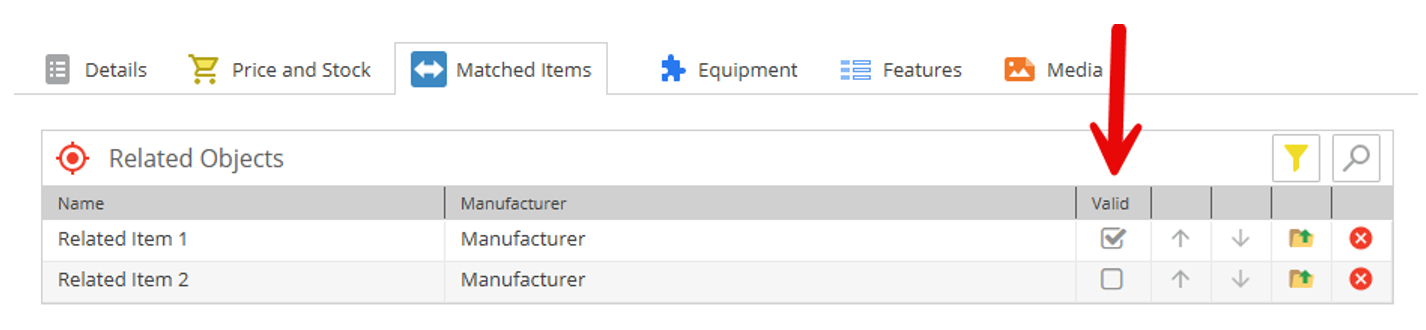
From a data modeling perspective, this approach is correct and aligns with Pimcore best practices. However, Portal Engine’s default layout rendering treats advanced metadata values as raw scalar outputs, without considering the semantic meaning of the field type.
Technical Context
The relationship included a checkbox field in the advanced metadata, used to indicate whether the relationship instance was considered current.
Internally, this checkbox is represented as a Boolean value. When rendered in the Portal Engine Data Pool detail view or in tabular relationship listings, the value was displayed using the default normalization logic:
- An unchecked value rendered as an empty cell.
- A checked value rendered as the integer 1.
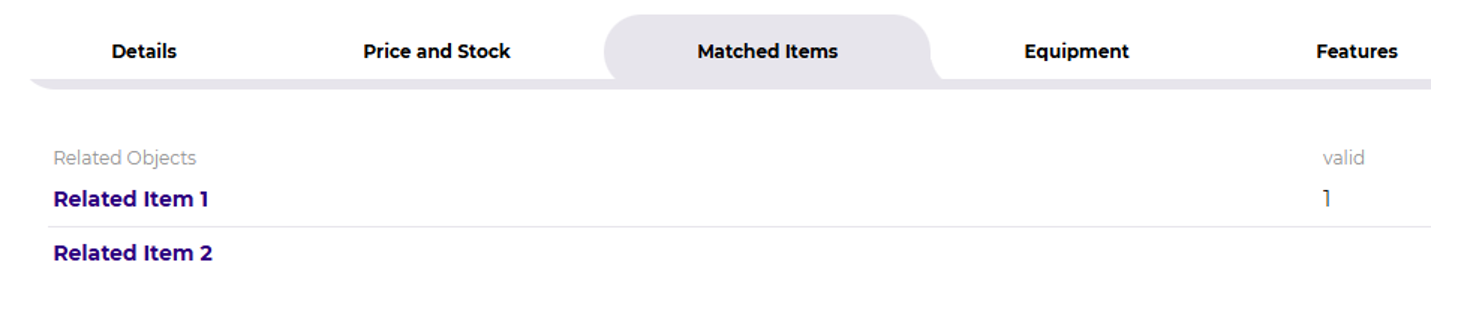
While technically accurate, this representation lacks semantic clarity. In list views where multiple related objects are displayed, users must quickly interpret the state of each relationship. A numeric or empty value does not communicate intent and introduces unnecessary cognitive overhead.
This issue cannot be addressed with calculated fields or object-level overrides, as the data being rendered belongs to the relationship metadata, not to the related object itself. The problem exists at the Portal Engine layout rendering layer.
Implementation Approach
To resolve this, we introduced conditional rendering logic within the Portal Engine layout layer for advanced metadata fields.
The implementation performs the following steps at render time:
- Detect whether the advanced metadata field type is a checkbox.
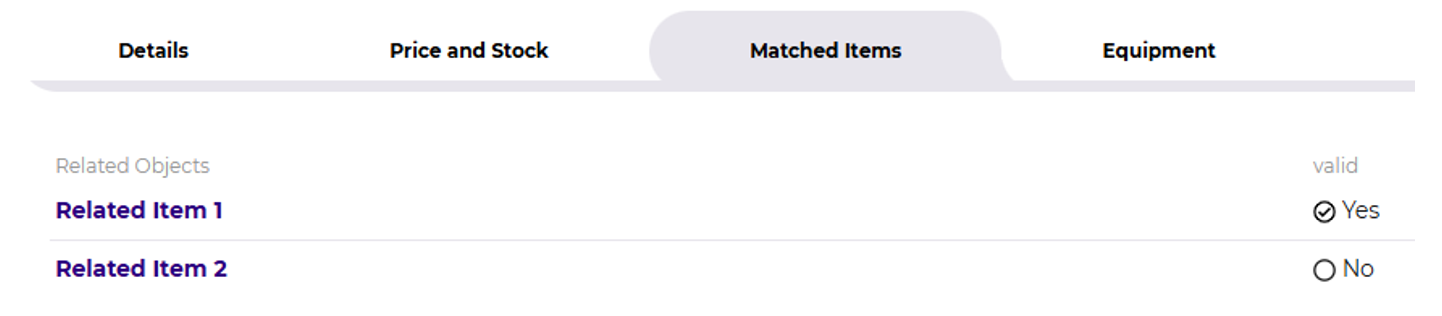
- If the field is a checkbox, render a visual checkbox component instead of a raw scalar value.
- Map the underlying value to a Boolean-aware representation.
- Optionally display a translated label corresponding to the Boolean state.
This ensures that checkbox metadata is rendered consistently with how Boolean fields are presented elsewhere in the system, preserving both visual and semantic alignment.
Localization and Extensibility
The Boolean label is fully translatable using Admin Translations. While the default mapping is yes or no, this design allows developers or administrators to define domain-specific terminology without modifying code.
Examples include:
- Active or Inactive
- Enabled or Disabled
- Tested or Untested
This makes the solution adaptable across different business contexts while maintaining a single, reusable implementation.
The Outcome
With this enhancement in place:
- Relationship metadata checkboxes are immediately understandable in both detail and list views.
- The visual representation aligns with the underlying data type.
- No changes are required to the object schema or data model.
- The solution scales cleanly across all Portal Engine layouts using advanced metadata.
Why This Matters
Small rendering decisions compound. A checkbox displayed as 1 is the kind of detail that creates a degraded user experience where users second-guess the data, asking what the numbers mean, or filing tickets to "fix the display". Solving it at the layout layer, once, means every project using advanced metadata benefits automatically.
It also reflects how we work with Pimcore. When we hit a limitation that affects more than just one client, we'd rather contribute the fix upstream than carry a custom patch forward forever. It's better for our clients, better for the platform, and better for the broader Pimcore community.
If you're on Pimcore 2025.4 or later, this improvement is already available with no configuration required. If you're on an older version and running into similar Portal Engine rendering gaps, let's talk. We've likely seen it before, and there's a good chance we've already solved it.